CLIENT: Tasmanian Government
LOCATION: Prospect, Tasmania
YEAR: 2018
CONTRACTOR: Vos Construction
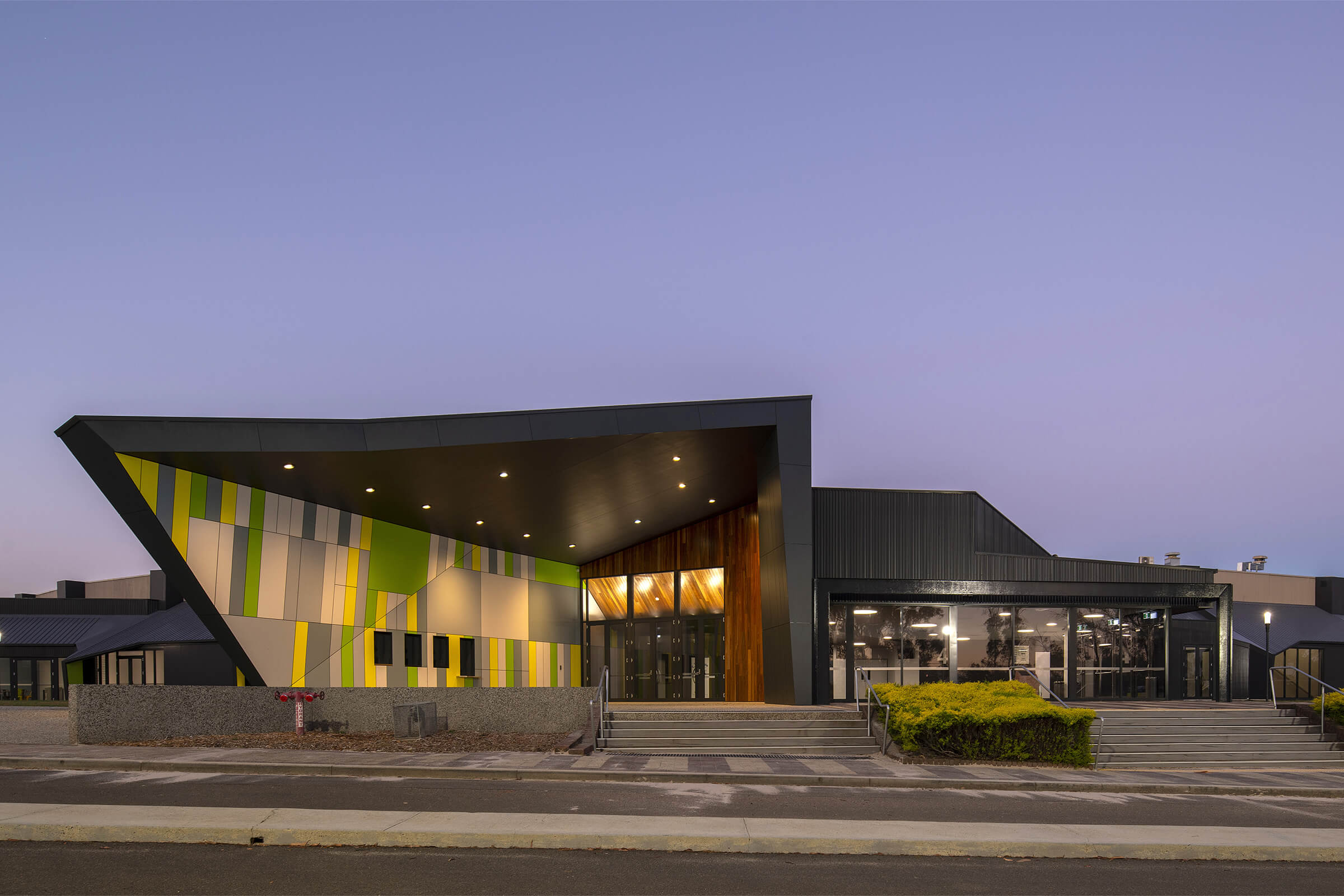
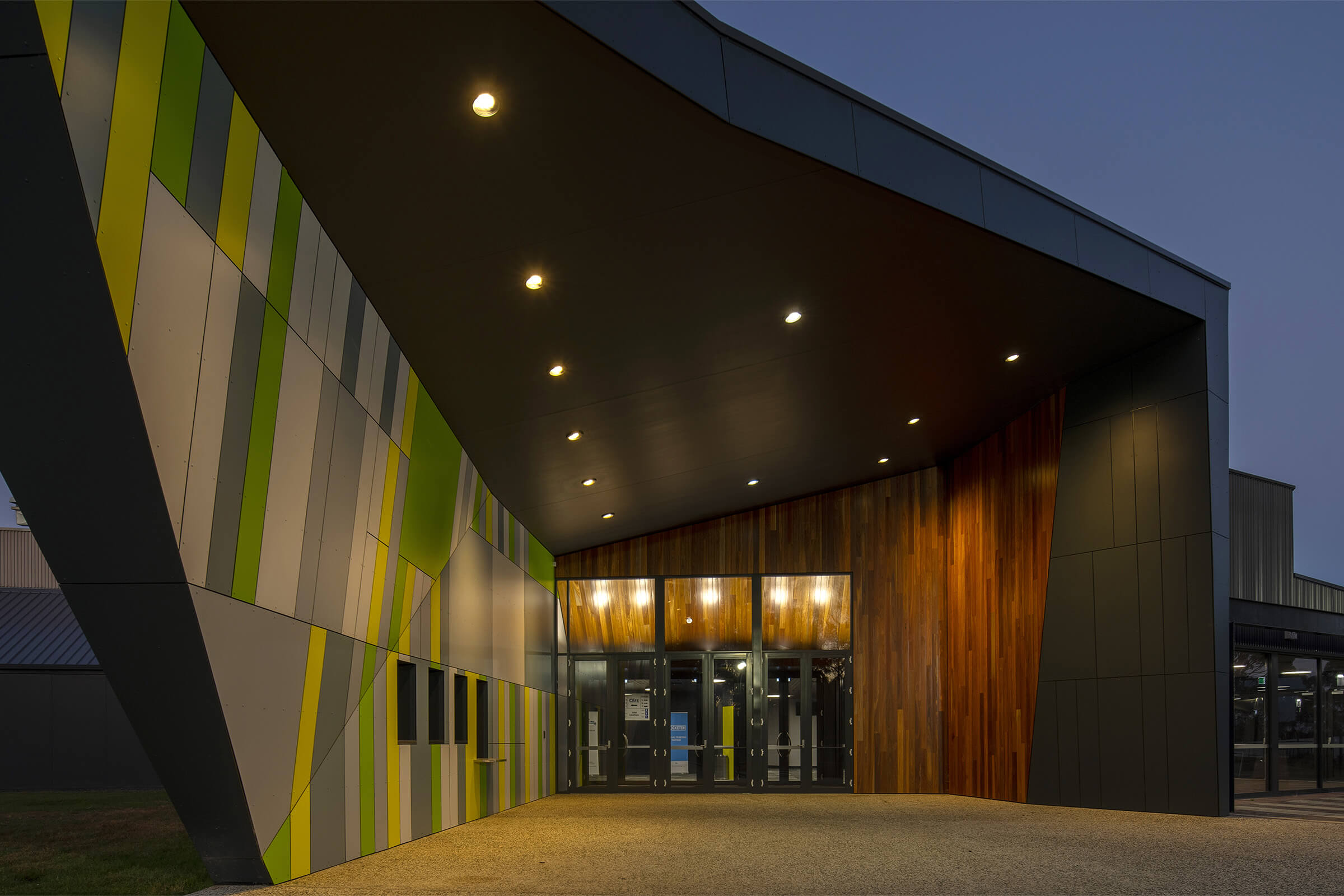
The redevelopment of the Silverdome entrance and concourse transforms the arrival experience at one of Tasmania’s premier indoor sporting venues. Designed to improve accessibility, visitor circulation, and wayfinding, the project creates a striking new public entrance that reflects the energy of elite cycling while celebrating the natural character of Northern Tasmania.
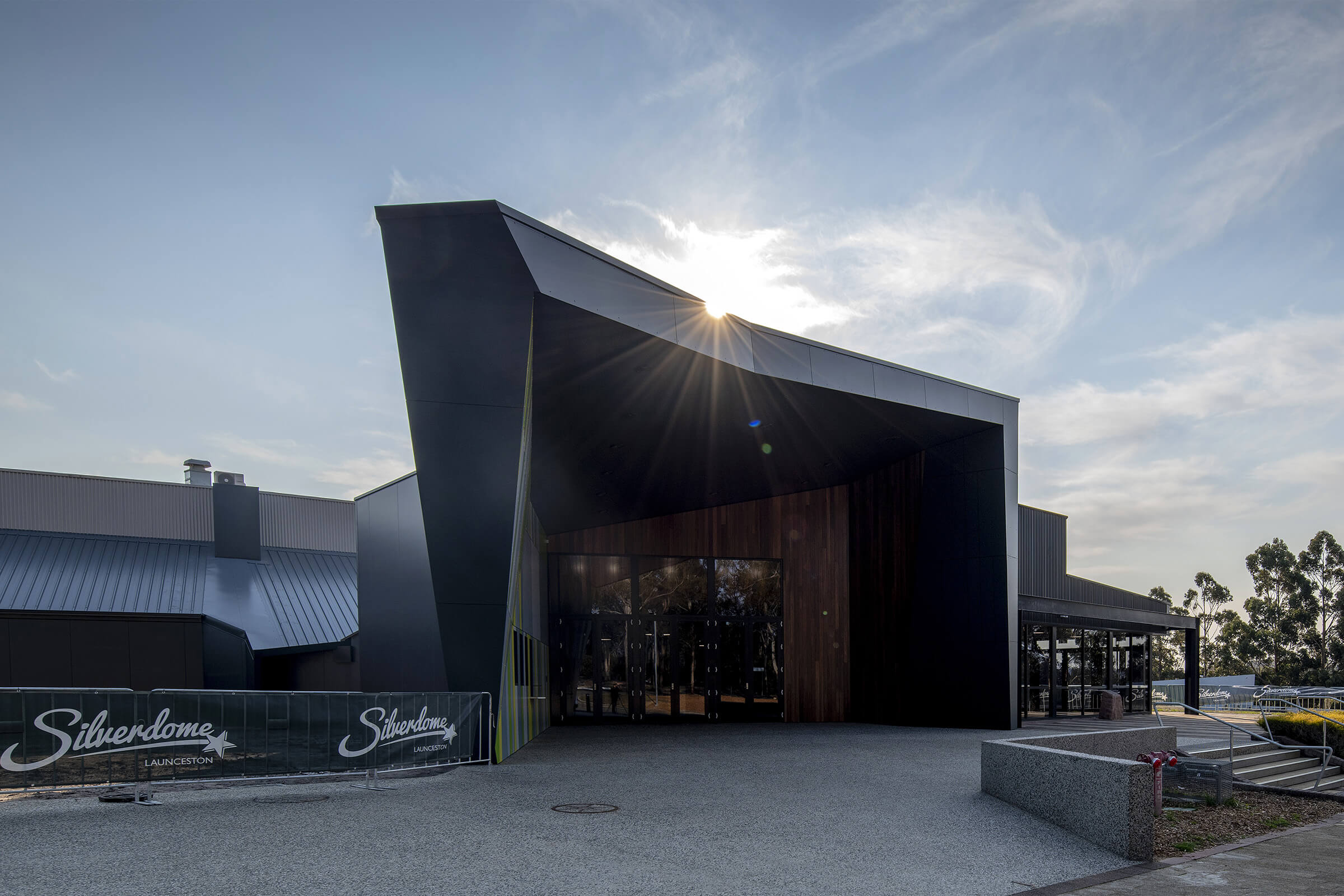
Developed as part of the broader master planning for the facility, the new entrance establishes a clear and highly visible arrival point for visitors attending sporting competitions, community events, and entertainment activities. The design resolves previous wayfinding challenges by providing an intuitive, welcoming gateway that enhances the overall functionality and identity of the venue.
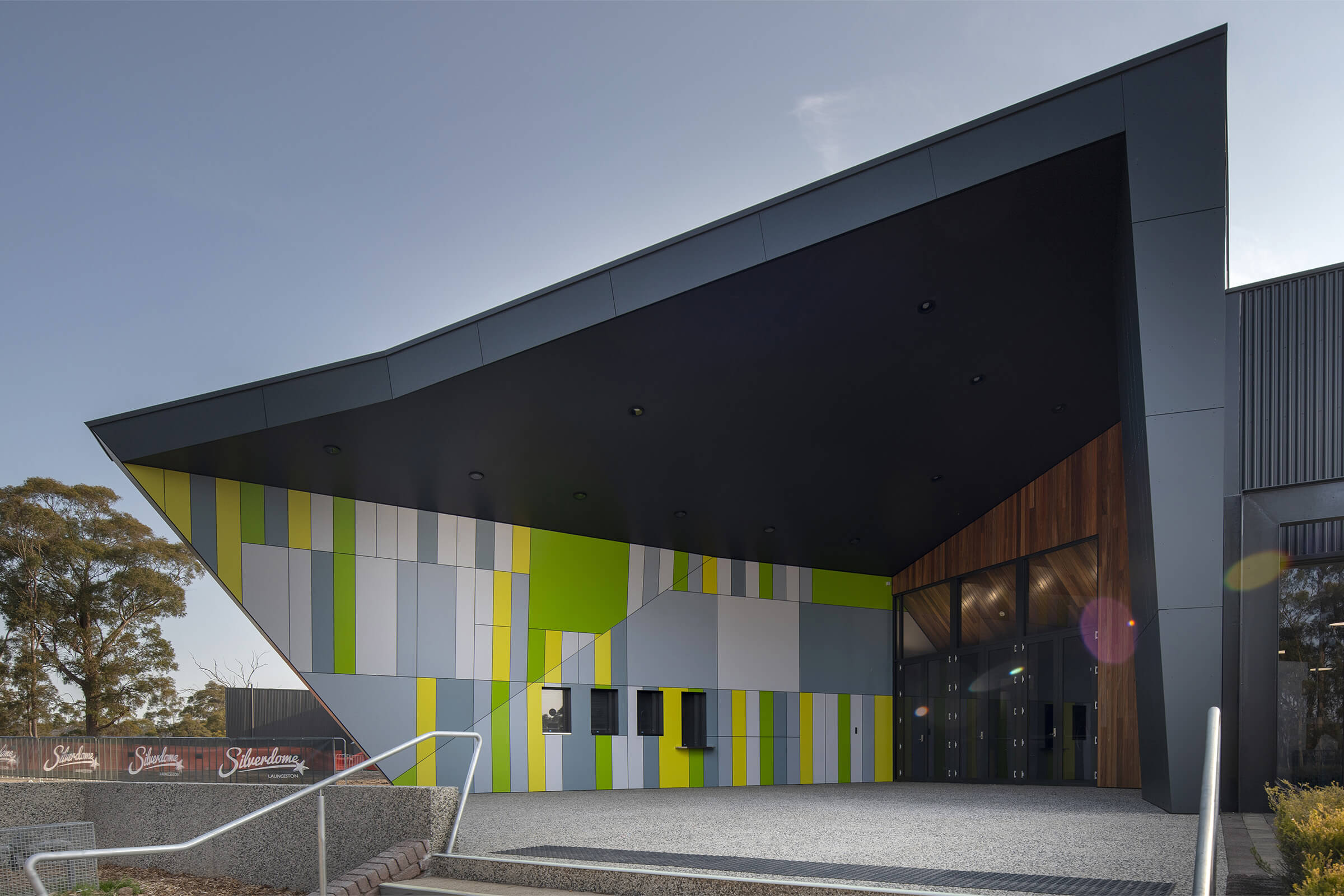
Inspired by the speed and movement of competitive track cycling, the architecture draws on the centrifugal forces generated within the velodrome. The sweeping form of the concourse roof conveys motion and momentum, while carefully positioned openings in the façade introduce natural light and vibrant colour, creating a dynamic connection between the building’s exterior and the excitement of the events held inside.
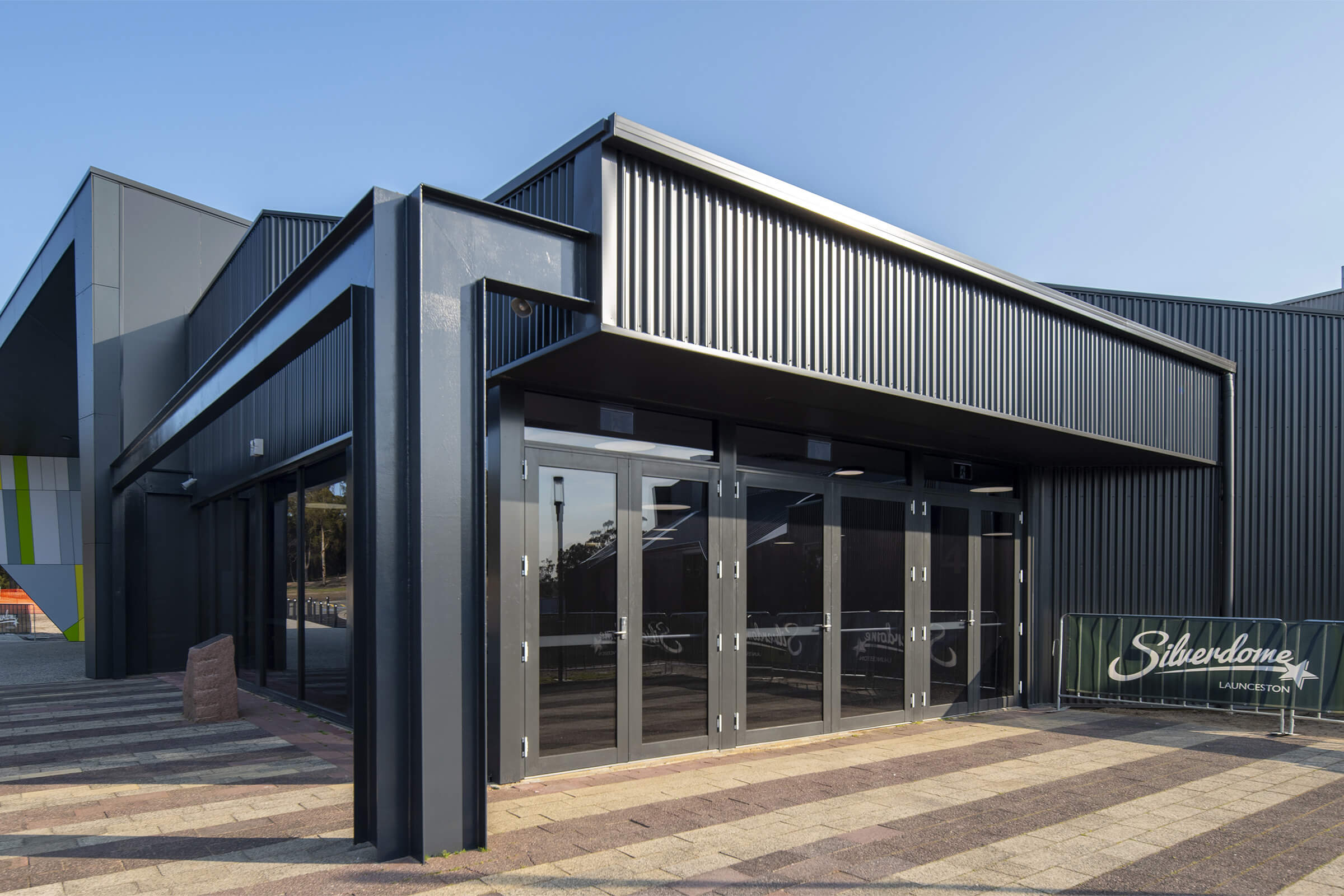
The architectural expression responds differently depending on how visitors approach the venue. For those arriving by vehicle, the bold, sculptural entrance canopy creates an unmistakable landmark and visual wayfinding element that projects confidently from the existing building. Visitors arriving on foot or by bicycle from the surrounding reserve experience a softer architectural character, with warm Tasmanian timber, natural materials, and sheltered public spaces creating a welcoming and human-scaled arrival sequence.
Combining contemporary architecture with practical functionality, the Silverdome redevelopment strengthens the venue’s role as a leading destination for sport, recreation, and community events. The project demonstrates how thoughtful master planning and carefully considered public architecture can improve visitor experience while creating a distinctive identity that reflects both the purpose of the building and its surrounding landscape.